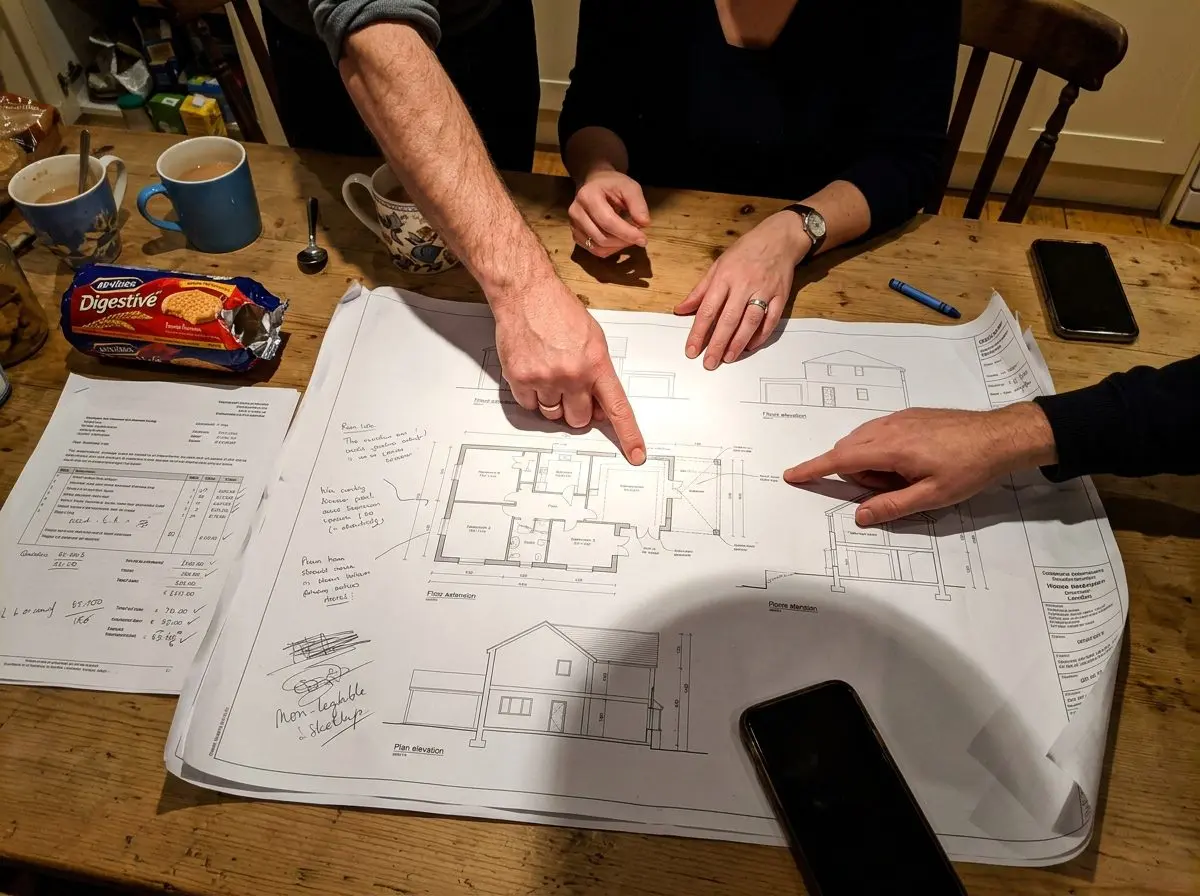
How you pay your builder matters as much as who you pick. The two common contracts share out the risk in very different ways, and the label on the quote doesn’t always tell you which one you’re really getting.
Fixed price
The builder agrees a price for a defined job, usually on a JCT Minor Works or Homeowner contract. If the job takes longer or the materials cost more, that’s the builder’s problem, not yours. It only works with a complete set of drawings and a specification: the price is only as fixed as the information behind it.
Cost plus
You pay what the work actually costs, plus an agreed margin, usually 10–20%. It’s transparent, but open-ended. It makes sense where nobody can know what’s behind the walls, as in a Georgian restoration, and even then it should come with a capped budget and an open book.
The trap in the middle
Plenty of “fixed” quotes are full of provisional sums: allowances for things not yet designed, such as the steels, the electrics or the kitchen. Each one is really cost plus. If provisional sums add up to more than a tenth of the total, the price isn’t fixed.
Questions to ask any builder
- Which items are provisional sums, and how much of the total do they add up to?
- How are changes priced: in writing before the work, or on the final bill?
- What is the payment schedule, and is there a retention held back at the end?
- Which contract will we sign?
- Who insures the works and the existing house while you’re on site?
What we do
We fix the price on an itemised schedule once the drawings are done, and price every change in writing before it happens. Every project in our portfolio shows its final account against the fixed price, so you can check how close we came.