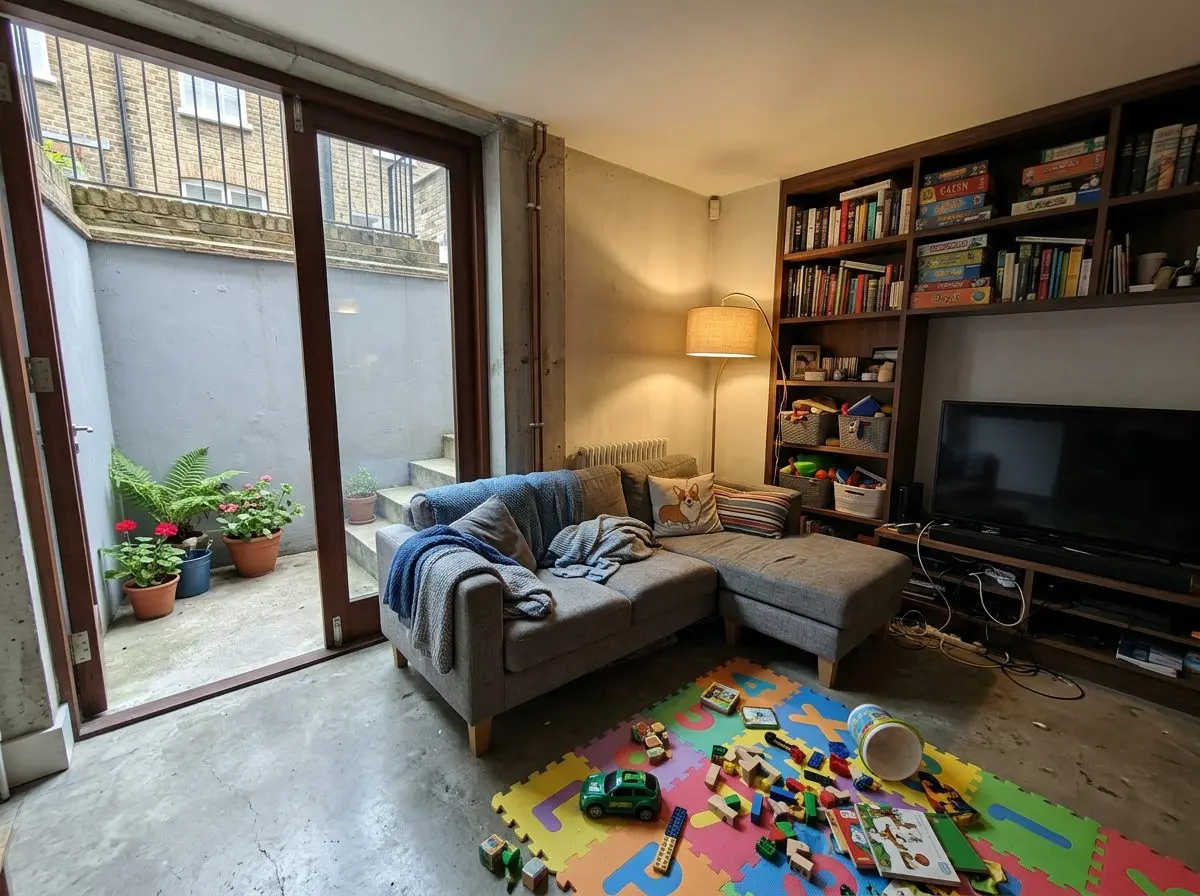
A basement under a London terrace is the biggest job we do, and the one with the most waiting in it. The digging is quick. Everything around it isn’t.
Before anyone picks up a shovel
| Stage | Typical time |
|---|---|
| Survey, design and structural engineering | 6–10 weeks |
| Planning, which most councils require for basements | 8–13 weeks |
| Party wall notices and awards, alongside planning | 2–3 months |
| Thames Water build-over agreement, if drains are affected | 4–8 weeks |
On site, stage by stage
- Weeks 1–3. Hoarding, a conveyor out to the skip, and temporary props.
- Weeks 4–14. Underpinning the walls in short sections and digging out between them.
- Weeks 15–20. The new slab, then the waterproofing: a drained membrane and twin pumps.
- Weeks 21–30. Lightwells, structure above, drainage and services.
- Weeks 31–38. Plaster, floors, joinery and handover.
Why it’s never the digging
Underpinning goes in one bay at a time, in a set order, and each bay has to cure before its neighbour can be dug. The waterproofing is tested before it’s covered. Building control and the party wall surveyors inspect at agreed stages. None of that can be rushed, and none of it should be.
Can you stay in the house?
Usually not for the middle four to six months, while the ground floor is propped and open. Most clients rent nearby and move back for the finishes. We plan the programme around the move, not the other way round.