Most of our clients stay at home while we build. It’s cheaper than renting and it’s usually fine, as long as everyone knows what each stage is going to feel like. This is what we tell people at the first meeting.
The first six weeks: loud and dusty
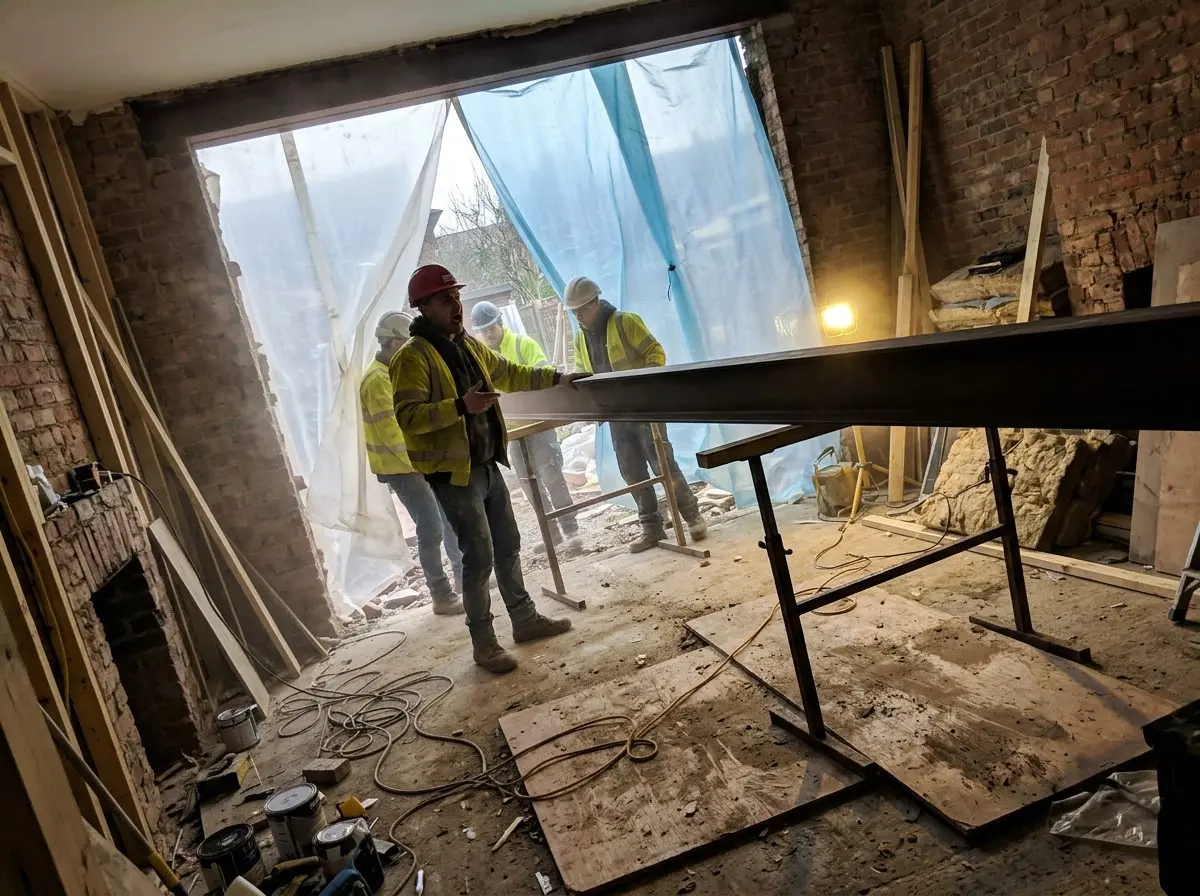
Demolition, foundations and the steels are the noisy part. We seal the work off behind zip-door dust screens, protect the floors you’re keeping and finish by 6pm. You’ll still hear it, and on concrete days you’ll feel it.
The middle: the kitchen goes
On a rear extension, plan on losing the kitchen for 10 to 14 weeks. We set up a temporary one, usually a sink, fridge, microwave and kettle in another room, and keep one bathroom working throughout.
What we do to keep the house liveable
- One named site lead who is there every day and answers the phone.
- Working hours of 8am to 6pm on weekdays, and nothing noisy on Saturdays without asking first.
- Our own site toilet and welfare. The crew never use yours.
- The house cleaned back to usable every evening, not just at the end.
The Friday report
Every Friday you get a short written report: what was done, photos, what happens next week, any decisions we need from you and any change to the price, priced in writing before it happens.
The first Friday report was the week we stopped worrying.
Hannah and James Whitfield, Elm Row
When it’s better to move out
For a basement or a whole-house restoration, moving out is usually quicker and calmer. The same goes if there’s a baby in the house, or someone works from home full time. We’ll tell you honestly at the survey.